The New Frontier of Content Strategy

Mastering ai-driven content optimization is key to online success. It's how businesses improve their digital content for better visibility and engagement.
- What is AI-driven content optimization?
- Uses Artificial Intelligence (AI) to improve digital content.
- Analyzes vast amounts of data quickly.
- Provides actionable insights for content quality and relevance.
- Aims to boost search engine visibility and audience engagement.
Traditional SEO focused on keywords, but AI goes deeper. It uses machine learning to understand why people search and what they truly need, leading to more precise content recommendations.
This shift is vital as many businesses see traffic decline. New AI search platforms like ChatGPT and Google AI Overviews are changing how people find information. AI tools automate tasks like keyword research and content analysis, freeing up your team for strategic work.
This guide will show how AI can open up your content's true potential.
What is AI Content Optimization and How Does It Differ from Traditional SEO?
At its heart, ai-driven content optimization uses artificial intelligence to improve digital content. The goal is to attract search engines and connect with an audience. This process helps content satisfy search engines and meet audience needs, leading to better rankings.
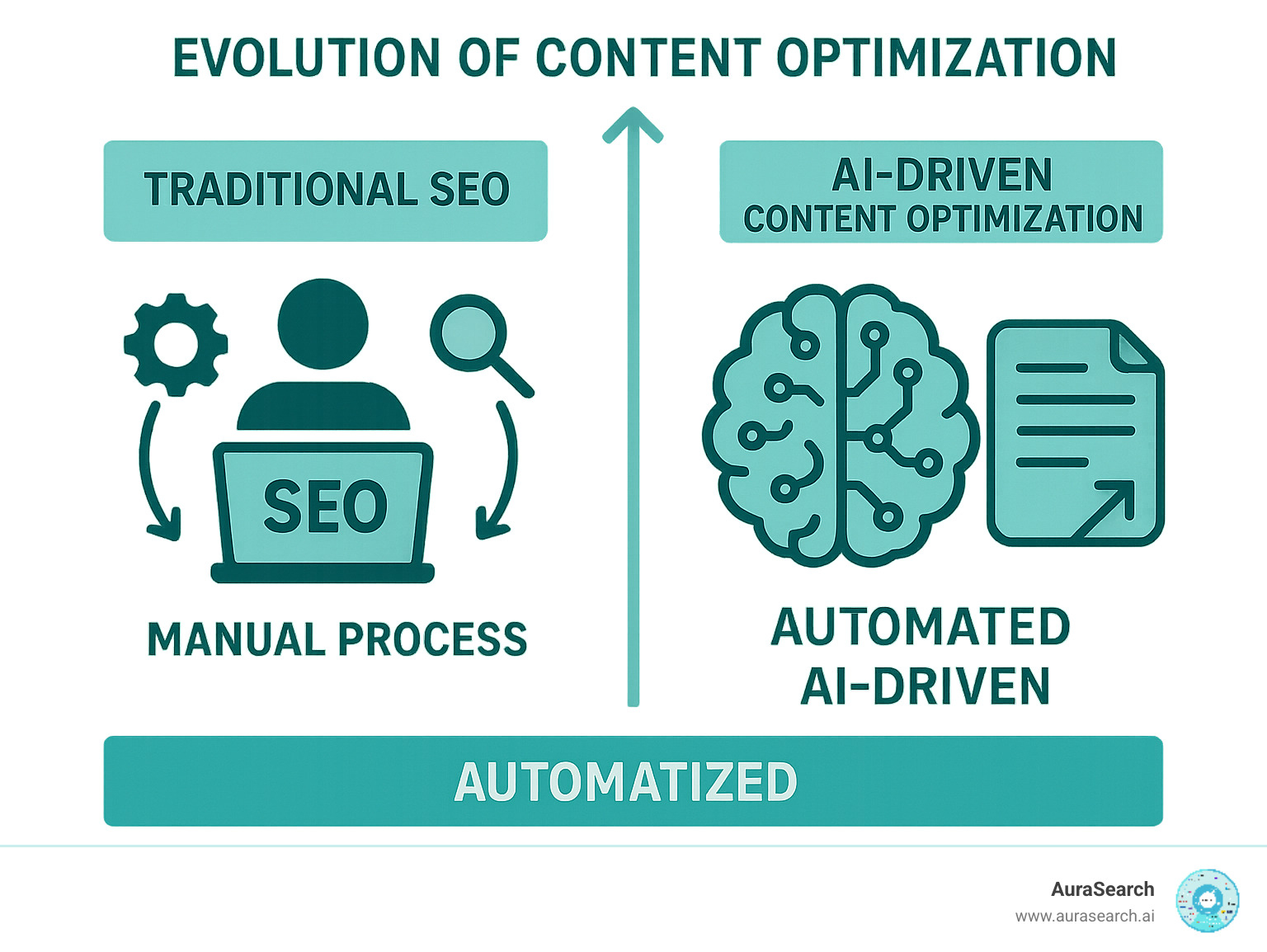
So, how is this different from traditional SEO? Traditional SEO focused heavily on manual tasks like keyword density and link building. These methods laid the groundwork but couldn't keep up with the speed and depth needed today. It often involved more guesswork than certainty.
Now, ai-driven content optimization uses machine learning algorithms to sift through massive amounts of data, understand meaning, and provide clear, actionable advice that traditional methods can't.
Think about Natural Language Processing (NLP), for instance. This is a crucial part of AI that lets it understand and interpret human language. This means we can get a much better sense of what people are feeling and looking for, which seriously boosts our content quality. It moves us past just matching keywords to truly understanding user intent.
Traditional SEO's keyword focus often led to stiff, "stuffed" content. AI enables a topic-focused approach, finding high-performing topics and phrases to create more comprehensive content that answers user questions effectively. It also helps spot on-page SEO opportunities, like content gaps, clarity improvements, and even chances to claim special features on search results pages.
The core difference is automation and precision. Traditional SEO required huge manual effort, whereas AI tools streamline optimization. They automate tasks like keyword research and content analysis, saving hours and freeing teams for creative, strategic work. This provides data-backed recommendations, not guesswork.
For a deeper dive into the tech that makes all this possible, you can explore the principles of Machine Learning , which is the powerhouse behind these advanced optimization techniques.
The Primary Benefits of AI-Driven Content Optimization
Embracing ai-driven content optimization provides a significant competitive edge, with profound benefits for any content strategy.
A key advantage is increased efficiency. AI tools automate time-consuming tasks like keyword research and content analysis. This increases content production without more human resources, allowing teams to focus on strategic activities.
This leads to scalability. AI analyzes vast amounts of data quickly, enabling us to scale content optimization efforts significantly. AI tools offer scalable solutions for businesses of any size.
Content quality also improves dramatically. AI platforms suggest improvements for quality, readability, and engagement via analytics. By analyzing user behavior, AI helps tailor content to specific audience segments, making it more relevant and engaging.
Improved search rankings are a huge draw. AI detects optimal keywords and metadata, improving organic search rankings and driving traffic. Integrating AI for SEO allows for real-time performance monitoring and strategy adjustments to maximize reach, including identifying the best platforms and times for publication.
Beyond rankings, AI drives higher user engagement. It enables content recommendations and personalized user experiences based on individual behavior. This hyper-personalization keeps users engaged, increasing session duration and reducing bounce rates.
Finally, AI provides invaluable data-backed decision making. It offers in-depth data analysis of trends, user preferences, and performance metrics. This enables rapid A/B testing of content variations for data-driven adjustments not feasible with manual methods.
It's clear that AI is no longer a niche tool but a mainstream necessity; over 75% of marketers already rely on AI in some form, and we understand why!
A Practical Guide to Using AI in Your Content Workflow
Integrating ai-driven content optimization into our daily workflow can transform content creation and strategy.
Streamlining Research: Competitor Analysis and Content Gaps
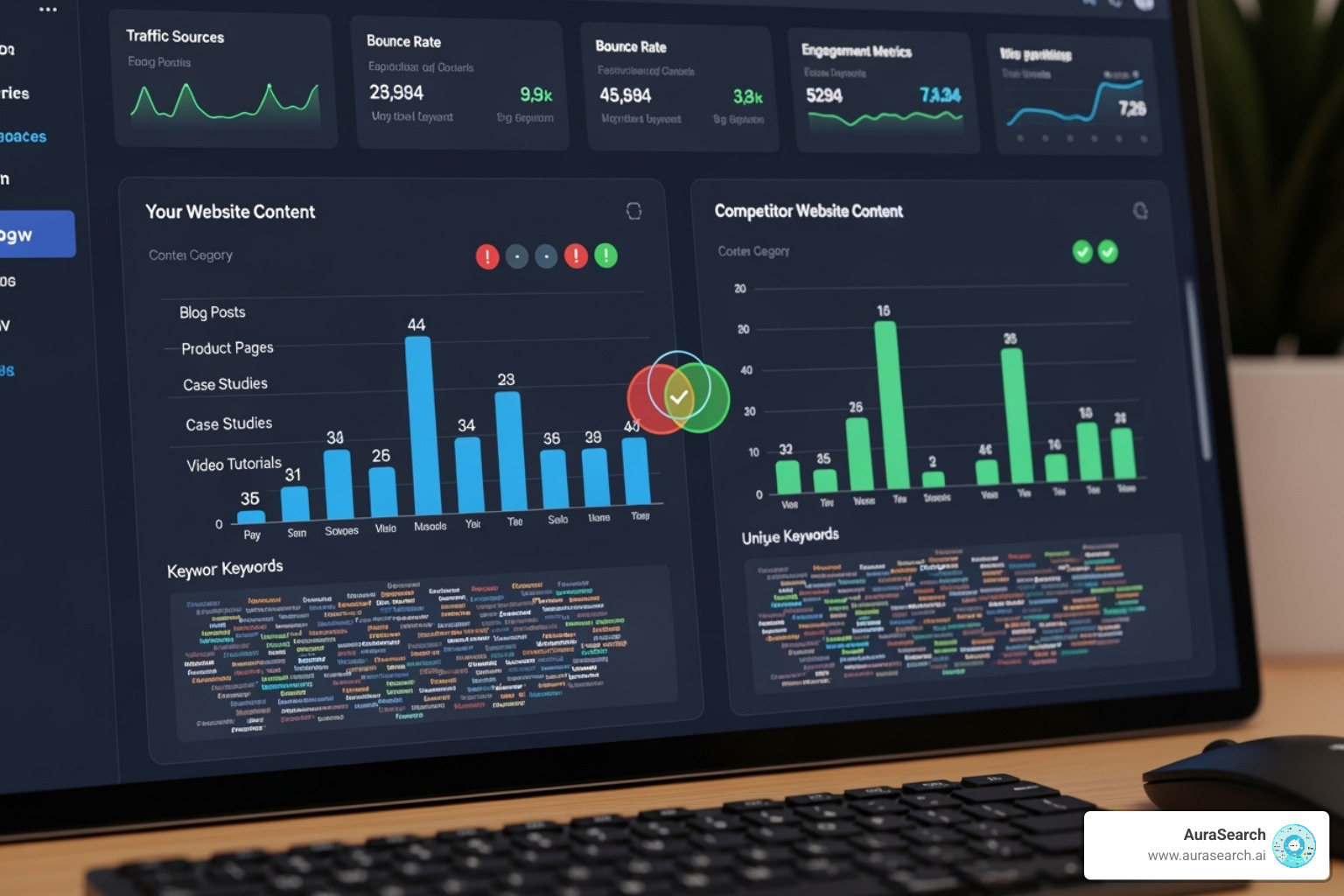
Thorough research is a time-consuming part of content strategy where AI shines. AI tools provide in-depth competitor analysis, helping us understand what works in our industry. We can analyze competitor articles for length, structure, and referring domains, creating a roadmap for our content.
Crucially, AI identifies content gaps human editors might miss. It scans top-ranking articles to find what's missing from your content or what questions aren't fully answered. AI reveals resonant topic areas, corrects grammar, and can identify opportunities to claim SERP features competitors are missing.
Building a Smarter Keyword Strategy with Keyword Clusters
Forget guessing which keywords to target. AI makes finding secondary keywords easy. These terms complement primary keywords, helping content rank for a wider range of queries and capture user intent.
AI tools suggest secondary keywords and group them into effective keyword clusters. This means optimizing for an entire topic area, not just a single phrase, ensuring comprehensive content. This approach helps understand a topic's broader semantic landscape. We always validate AI suggestions with real-world search data for accuracy.
Automating the Creation of Content Briefs, Titles, and Metas
Creating data-backed content briefs is daunting, but AI can generate them in minutes. These briefs include recommended headings, keywords, and competitor coverage, streamlining the creation process. This ensures writers have what they need to produce high-quality, optimized content.
For better click-through rates, AI is invaluable for crafting page titles and meta descriptions. Tools like ChatGPT help create and refine them, generating multiple compelling options. This ensures they entice readers, include keywords, and meet character limits (titles under 60 characters, metas under 105). This automation ensures consistency and effectiveness.
Enhancing User Engagement with AI-Powered Personalization
The holy grail of content marketing is personalization, and AI makes it feasible at scale. AI algorithms analyze user behavior to tailor content to specific audience segments, making it more relevant and engaging. This allows for content recommendations and user experiences based on individual behavior, increasing session duration and lowering bounce rates.
Beyond tailoring content, AI improves clarity and readability. It can refine language style and readability levels based on audience preferences, making content more accessible and enjoyable. This ensures our message resonates, fostering stronger connections with our audience.
For more insights into how we leverage AI for advanced SEO strategies, you can check out More info about our AI SEO services.
Implementing Your AI Strategy: Tools, Best Practices, and Challenges
Integrating ai-driven content optimization requires more than the right tools; it's about building an efficient workflow where AI plays a crucial, but not solitary, role.
Choosing Your Toolkit: Key Features in AI Optimization Software
When choosing AI content optimization software, look for features that simplify your work and improve your content.
First, robust content scoring or grading provides instant feedback on how your content compares to top-ranking competitors, offering real-time tips for better search visibility.
Next, NLP (Natural Language Processing) term suggestions are powerful. Instead of just finding keywords, these tools analyze top search results to suggest relevant terms and topics. This helps create comprehensive, valuable content that avoids keyword stuffing.
A user-friendly content editor is also important. Smooth integration with platforms like WordPress or Google Docs makes the optimization process seamless.
Finally, consider the different tool types. All-in-One Platforms cover everything from research to tracking for a holistic approach. Standalone Content Editors focus on on-page factors and quality, often integrating with other SEO platforms. AI Writing Assistants now include features like keyword integration and readability checks, helping draft optimized content. The best tools use advanced machine learning to provide valuable recommendations.
How to build an ai-driven content optimization workflow
An effective ai-driven content optimization workflow starts with clear objectives and KPIs, such as increased organic traffic, better engagement, or higher conversions. AI tools are excellent for tracking progress toward these goals.
With continuous monitoring and iteration , your strategy can remain nimble. AI tools monitor content performance in real-time, offering suggestions for improvements and alerting you to issues like sudden traffic drops.
AI is a game-changer for A/B testing content variations . It allows for rapid, efficient testing to see what resonates with your audience, enabling data-driven adjustments that weren't feasible before. A typical A/B test can improve the conversion rate by up to 49%.
Lastly, AI can revolutionize your internal linking strategy. It analyzes your site's structure to find new linking opportunities, spreading page authority and improving navigation for users and search engines. You can even ask AI for linking suggestions for new or important pages.
Navigating the Limitations: The Importance of Human Oversight
While AI is a phenomenal partner, it's not a magic wand. The importance of human oversight cannot be overstated.

A key challenge is avoiding over-reliance on AI . AI lacks true creativity, nuanced understanding, and the ability to grasp complex human emotions. Your unique brand voice and authentic storytelling depend on human ingenuity. View AI as a powerful assistant, not a replacement for human strategy and creativity.
Maintaining creativity and brand voice is paramount. Ensure AI-optimized content aligns with your brand's personality. Human editors must refine, add depth, and inject the essential "human touch" that AI can't replicate.
Fact-checking and accuracy are critical. AI can pull from vast datasets but doesn't always verify sources or guarantee correctness. Always perform thorough fact-checking, especially for sensitive or technical topics where there is no room for error.
Finally, be mindful of ethical considerations and data privacy concerns . Handle data fed into AI systems with care, respecting privacy. Consider the ethical implications of AI content, like potential misinformation or bias, and commit to best practices.
AI is a tool to augment human intelligence, not supersede it. The most successful ai-driven content optimization strategies blend AI's efficiency with human creativity, critical thinking, and ethical judgment. It's the best of both worlds.
The Future of Content and The Impact of AI Optimization
The digital world is always changing, with AI at its heart. Understanding how ai-driven content optimization affects your website's performance is crucial for staying ahead.
How ai-driven content optimization impacts website performance
AI-driven content optimization provides actionable insights on content structure, keyword placement, and metadata. This leads to higher rankings and more organic traffic. AI also helps identify the best platforms and times to publish, maximizing your content's reach.
One of the biggest shifts we're seeing is the rise of Generative Engine Optimization (GEO) . This goes beyond traditional search, optimizing for emerging AI platforms and LLMs like ChatGPT and Google AI Overviews. These engines prefer content structured for them, and GEO is key to visibility. At AuraSearch AI, we help businesses adapt to this new landscape, ensuring your content appears wherever your audience is looking.
Predictive SEO models , powered by AI, analyze data to forecast what content will perform best, emerging trends, and user behavior. This allows for a proactive content strategy. It also enables hyper-personalization , tailoring content to individual users based on their browsing history and preferences.
This changes the role of content strategists. AI automates mundane tasks like manual keyword research and content audits. This frees strategists to focus on high-level strategy, creativity, and audience connection. This shift allows for scaling content efforts, producing optimized content efficiently for a significant boost in organic traffic and search rankings.
Frequently Asked Questions about AI Content Optimization
It's natural to have questions about ai-driven content optimization . Let's tackle a few common ones.
What's the main difference between AI optimization and just using an AI writer?
An AI writer is like a fast typist. You give it a prompt, and it creates text. Its main job is to create , which is great for drafting articles, generating ideas, or making social media posts.
AI-driven content optimization , on the other hand, is a broader, more strategic process. It uses AI to analyze , refine , and improve content for peak performance. This includes identifying content gaps, suggesting keywords, optimizing meta descriptions, analyzing competitors, and boosting readability. While an AI writer is a part of content creation, AI optimization ensures all content--whether human-written or AI-generated--is tuned to meet performance goals like higher rankings and audience engagement.
Can AI completely replace human SEOs and content writers?
No, AI is a partner, not a replacement. While AI automates tasks and provides data-driven insights, it cannot replicate the creativity, strategic thinking, nuance, or emotional intelligence of human SEOs and writers.
Think of AI as a powerful assistant. Human expertise remains essential for defining strategy, understanding user intent, developing a brand voice, fact-checking, ensuring ethics, and adapting to market trends. AI lets us focus on higher-level, creative work, making us more efficient.
How do I measure the success of my AI content optimization efforts?
Measuring success is vital to ensure a return on investment in ai-driven content optimization . We track various metrics for a holistic view of progress.
Key metrics include organic traffic growth and search engine rankings for target keywords. User engagement metrics like bounce rate, time on page, and conversion rates are also crucial. Other indicators of success are appearances in SERP features (like featured snippets), content comprehensiveness scores from AI tools, keyword expansion into related terms, and the overall conversion rate for business goals.
By continuously monitoring these metrics and leveraging AI's analytical capabilities, we can refine our strategies and ensure our ai-driven content optimization efforts are yielding tangible, measurable results.
Conclusion: Accept the Future of Content with a Strategic AI Partner
As we wrap up, it's clear that ai-driven content optimization is a game-changer for creating, optimizing, and sharing digital content.
Gone are the days of guesswork and manual tasks. AI enables a precise, data-powered approach. It acts as a powerful sidekick, helping streamline research, build smarter keyword strategies, automate tasks, and personalize content to capture audience attention.
But here's the important part: while AI brings incredible new powers, it doesn't replace us. Human creativity, strategic thinking, and ethical judgment remain vital. They ensure content connects with real people, not just search engines. It's the best of both worlds - human ingenuity blended with AI efficiency.
At AuraSearch AI, we're all about helping businesses steer this new world. We offer expert generative AI SEO services to help you adapt and succeed in the evolving AI-driven search landscape. Our goal is to open up your content's potential, ensuring it gets found and connects with your audience across traditional search and new AI platforms.
Ready to see how smart optimization can completely transform your online presence?